
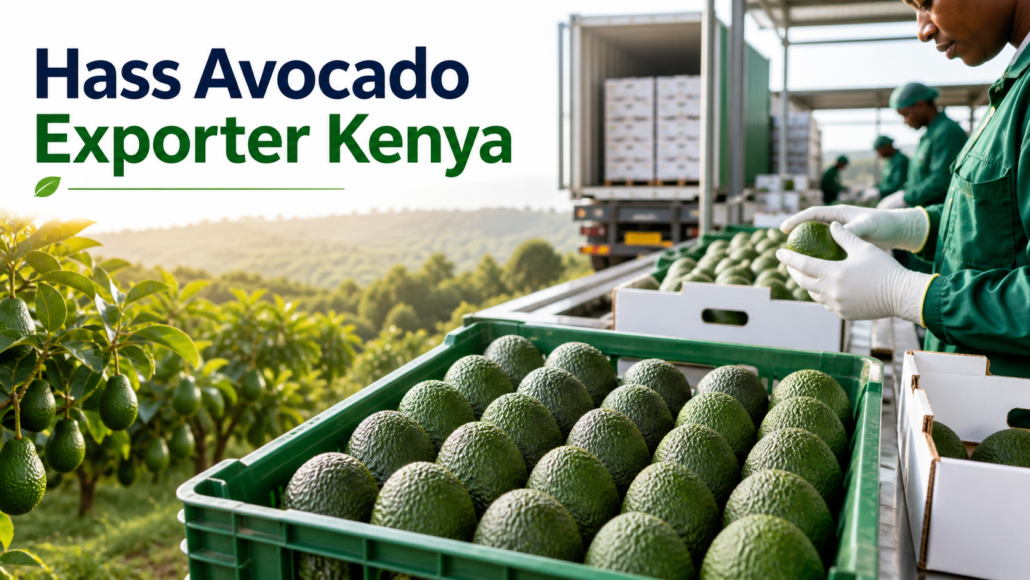
Shipping avocados from Kenya successfully requires the fruit, packing plan and transport route to work as one system. Sea freight can support larger commercial programmes at a lower transport cost per carton, while air freight can serve urgent or smaller consignments. Neither route protects quality unless maturity, pre-cooling, packaging, documents and destination clearance are coordinated before dispatch.
This guide helps importers, distributors, wholesalers and retail programmes compare sea and air options for Kenyan avocados. It explains the operational questions to resolve with the exporter, freight provider, customs broker and receiving team. Buyers still comparing suppliers can begin with our Kenya avocado exporters sourcing guide.
Kenya avocado shipping decisions at a glance
- Use sea freight when volume, lead time and fruit condition support a planned refrigerated-container programme.
- Use air freight when speed is more important than the higher freight cost, or when the commercial volume is too small for a sea programme.
- Confirm destination rules first. The importing market determines plant-health, food-safety and clearance requirements.
- Match maturity to the route. Fruit prepared for a long sea journey may require a different harvest and arrival plan from an urgent air shipment.
- Record responsibilities. The contract and named Incoterm should identify who books transport, arranges insurance, supplies documents and manages each handover.
For a broader sourcing overview, use our Kenyan avocado importer checklist.
Start with the buyer’s delivery brief
A freight quotation is meaningful only when the commercial requirement is clear. Before comparing routes, provide the destination country, port or airport, required arrival week, variety, carton format, preferred counts, trial and programme volume, quality specification, labelling needs and expected clearance time.
Also state whether the buyer has a ripening facility, cold store or direct retail programme after arrival. The logistics team needs to understand the complete journey, not only the international leg. A request for “one container of Hass” is incomplete until size distribution, pack, maturity, inspection, documents and delivery responsibilities are defined.
Sea freight for Kenyan avocados
Avocado sea freight from Kenya is normally considered for planned commercial volumes where the fruit can tolerate the total journey under an agreed refrigerated programme. The quotation should identify the loading point, port, carrier, service, transhipments, estimated transit range, equipment, controlled-atmosphere option, cut-off dates and destination free time.
Advantages of sea freight
- Lower transport cost per carton can be possible for suitable commercial volumes.
- Refrigerated containers can support an integrated temperature-controlled programme.
- Larger weekly or seasonal orders can be planned around vessel schedules.
- Container seals and monitoring records can strengthen shipment control.
Checks before booking sea freight
Do not select a route from the advertised sailing time alone. Confirm inland movement to port, terminal cut-offs, connection risk, the number and location of transhipments, container availability, power continuity, destination congestion and the importer’s ability to clear and collect the fruit quickly.
Specialist carriers use reefer and controlled-atmosphere technologies to manage temperature and gases during avocado transport. For example, MSC’s avocado shipping guidance explains that controlled-atmosphere systems can regulate oxygen, carbon dioxide and ethylene-related conditions. The exact equipment and settings must be agreed for the specific fruit, route and carrier rather than copied from another shipment.
Air freight for Kenyan avocados
Avocado air freight from Kenya can suit urgent orders, trials, smaller commercial volumes or programmes where a shorter transport window justifies the higher freight cost. Buyers should still plan temperature control, airline acceptance, build-up time, handling at origin and destination, customs clearance and final refrigerated delivery.
Advantages of air freight
- Shorter international transit can reduce exposure to long-voyage disruptions.
- Smaller or urgent consignments may be commercially possible.
- Trial orders can reach buyers before a larger programme is considered.
- Delivery can be aligned with time-sensitive wholesale or food-service demand.
Checks before booking air freight
Confirm chargeable weight, space availability, flight routing, connections, cargo cut-off, terminal dwell time and weekend or holiday clearance. Ask how temperature-sensitive cargo is handled while waiting for screening, build-up, transfer and collection. Fast flight time does not compensate for poor origin handling or delayed destination release.
Sea freight versus air freight comparison
| Decision factor | Sea freight | Air freight |
|---|---|---|
| Typical use | Planned commercial volumes | Urgent, smaller or trial consignments |
| Transport cost | Potentially lower per carton at suitable scale | Usually higher per kilogram |
| Journey | Longer and more dependent on vessel connections | Shorter, but airport handling and clearance still matter |
| Equipment | Reefer container; controlled atmosphere may be considered | Air-cargo packaging plus temperature-managed handling |
| Key risk | Long exposure, transhipment or reefer disruption | High cost, space constraints or terminal delay |
| Buyer preparation | Early programme and clearance planning | Rapid receiving and distribution readiness |
The correct choice depends on landed cost, fruit condition and the buyer’s sales programme—not speed or freight price alone.
The cold chain begins before international transport
Cold-chain performance starts at the orchard and packhouse. Fruit harvested at unsuitable maturity, left in field heat, mechanically damaged or packed without ventilation cannot be repaired by a reefer container or aircraft.
The Agriculture and Food Authority’s Avocado Value Chain Good Practice Guide covers maturity, handling and export-practice considerations. Buyers should also review Afrisun’s Kenya avocado export season guide and agree the maturity method for the proposed orchard lot.
Origin controls to record
- Orchard, harvest date and lot identification.
- Agreed maturity or dry-matter assessment.
- Harvest handling and time to the packhouse.
- Sorting for defects, damage and unsuitable fruit.
- Count, weight and carton verification.
- Pre-cooling method and timing.
- Cold-room, truck and container temperature records where agreed.
- Loading photographs, seal number and dispatch time.
Use the Kenyan avocado quality inspection checklist to define acceptance points before packing.
Agree settings instead of assuming them
Temperature, ventilation, humidity and atmosphere decisions depend on variety, maturity, journey, equipment and destination plan. They should be confirmed by qualified post-harvest and logistics specialists for the specific shipment. The written loading instruction should match the carrier booking and the buyer’s agreed specification.
Packaging, pallets and traceability
Cartons must protect the fruit, maintain ventilation and remain stable through stacking, inland transport and terminal handling. Specify carton net weight, count sizes, permitted mixes, materials, ventilation, labels, pallet pattern, corner protection, strapping and wrap.
Our guide to Kenyan avocado packaging and sizes explains the relationship between carton weight and count. Each packed unit should also connect to the agreed lot and handling records; use the carton traceability checklist before approving artwork or labels.
Documents for shipping avocados from Kenya
The document set varies by destination, route, contract and current rules. A shipment file may include:
- commercial invoice and packing list;
- phytosanitary certificate;
- certificate of origin;
- bill of lading or air waybill;
- inspection, treatment or conformity evidence where required;
- insurance certificate where applicable;
- traceability and temperature records agreed with the buyer; and
- destination permits, registrations or declarations.
KEPHIS phytosanitary guidance explains that exported plant products must conform to the importing country’s requirements. KEPHIS has also highlighted document-related interceptions and the need for coordination between farms, exporters and logistics providers. Names, addresses, quantities, product descriptions and reference numbers should be reconciled before original or electronic documents are released.
Destination requirements are not identical. Review our avocado import requirements overview, then verify the current rules with the competent authority and customs broker in the receiving market.
Incoterms, insurance and landed cost
State the Incoterm and named place or port precisely. The ICC Incoterms 2020 rules allocate delivery obligations, risks and costs between seller and buyer. They do not replace the full sales contract or define every quality, payment and claims issue.
Compare routes using landed cost. Request a breakdown of fruit, packing, pallets, inland transport, inspection, certification, handling, freight, surcharges, insurance, destination terminal charges, customs brokerage, duties or taxes, storage, demurrage risk and final delivery. Confirm what happens if a flight rolls, a vessel connection changes or clearance is delayed.
Buyer checklist before booking
- Destination, delivery point and required arrival window confirmed.
- Variety, count, carton and volume agreed.
- Maturity and quality specification recorded.
- Sea or air route selected against landed cost and commercial need.
- Carrier, routing, cut-offs and handovers reviewed.
- Temperature, ventilation and monitoring instructions approved.
- Documents and responsible parties listed.
- Incoterm, insurance and claims process agreed.
- Importer, broker, cold store and receiving team ready.
- Contingency contacts available for delays or document corrections.
Common avocado shipping mistakes
- Choosing the lowest freight quote without comparing the complete route.
- Booking before confirming fruit maturity and available size distribution.
- Using a generic temperature instruction without shipment-specific review.
- Treating packaging, ventilation and palletisation as separate from transport.
- Leaving permits or customs arrangements until the cargo is moving.
- Failing to reconcile the invoice, packing list, labels and transport document.
- Having no agreed arrival inspection or claims procedure.
Arrival inspection closes the shipping loop
The receiving team should record seal condition, pulp and ambient observations where agreed, carton condition, counts, weights, external defects, internal condition samples, ripening behaviour and any temperature data. Evidence should be time-stamped and connected to the shipment reference.
Use Afrisun’s avocado shipment arrival feedback checklist to turn the result into specific adjustments for the next programme.
Frequently asked questions
Is sea or air freight better for Kenyan avocados?
Neither is universally better. Sea freight can suit planned commercial volume, while air freight can suit urgent, smaller or trial consignments. Compare landed cost, maturity, journey risk and the buyer’s sales window.
Can one cold-chain setting be used for every shipment?
No. Settings should be determined for the variety, maturity, equipment, route and destination plan. Record the approved instruction in the booking and loading documents.
Who is responsible for freight and insurance?
The named Incoterm and sales contract allocate responsibilities. Confirm the exact delivery point, risk transfer, insurance cover and excluded destination costs before contracting.
What information is needed for an avocado freight quotation?
Provide destination, delivery window, variety, counts, carton format, volume, route preference, temperature and monitoring needs, Incoterm and required documents.
Plan Kenyan avocado supply with Afrisun Orchards
Afrisun Orchards supports professional buyers with specification review, available supply matching, packaging coordination, shipment preparation and export documentation planning. Every offer remains subject to current fruit availability, maturity, route, destination acceptance and final commercial terms.
Send your destination, variety, count range, carton format, volume, delivery window and preferred route through our avocado buyer enquiry page.
This guide provides general commercial information and is not legal, customs, food-safety or logistics advice. Requirements, schedules and charges can change; verify the current conditions for every shipment.
Need export-ready Kenyan avocados?
Share your variety, size count, volume, packaging, destination and delivery window. Afrisun Orchards will help coordinate verified sourcing, quality control and export preparation.